
Managing Travel Anxiety: A Practical Guide for the Nervous Traveller

You've done it - you've decided to go. Maybe you booked the flight in a moment of bravery and now the panic has set in. Maybe you've been planning this trip for months but the closer it gets, the more your brain is generating worst-case scenarios. Maybe travel has always made you feel this way - quietly wound up, second-guessing every decision, wondering if people like you are supposed to travel at all.
Here's what I want you to know: people exactly like you travel. Every single day. They feel nervous, they pack too many backup plans, they check the flight details three times - and then they go. They manage. Often, they have the time of their lives.
I know because I'm one of them. I've visited close to 50 countries and I still feel the flutter before every trip. Travel anxiety doesn't mean you can't travel. It just means you need the right strategies in place - and that's exactly what this guide is for.
We're going to work through the full journey: managing the planning overwhelm before you leave, navigating airports and flying, arriving somewhere unfamiliar, and the particular nerves that come with solo travel. You don't have to conquer your anxiety. You just have to learn to travel alongside it.
Note: If you are still nervous about taking that first step towards travel - pick up "A Beginners Guide to Travelling with Confidence."
Part 1: Taming Pre-Trip Planning Overwhelm
For many nervous travellers, the anxiety starts well before the airport. It starts the moment you open a browser tab and are immediately confronted with an ocean of advice, conflicting recommendations, and a to-do list that seems to double every time you close your laptop.
Planning is supposed to feel empowering. But when you're already anxious, too much information can quickly become paralysing. Here's how to take back control.
Give Yourself Permission to Plan in Layers
There's a myth that good travellers plan everything upfront and then float through the trip effortlessly. That's not how it works - for anyone. Even experienced travellers plan incrementally.
Try working in three layers:
Layer 1 - The Essentials: Book your flights and accommodation for at least your first few nights. That's it. That's enough to start.
Layer 2 - The Framework: Once flights are confirmed, add any must-do experiences that need advance booking (popular tours, restaurants, national parks with entry quotas). Research your destination in broad strokes.
Layer 3 - The Details: In the week before departure, fill in the finer points - transport between locations, day-to-day meal ideas, backup plans. But resist the urge to do this too early. Over-planning creates rigidity, and rigidity causes stress when things inevitably shift.
Giving yourself permission to not know everything at once is one of the most practical things you can do for your travel anxiety.
Set a Planning Time Limit
If you're the type who can spend four hours researching the best coffee in a city you won't visit for six months, you need a timer. Seriously.
Give yourself a dedicated planning window each day or week - say, 30 minutes on a Tuesday evening - and when the timer goes off, you close the browser. This prevents the planning spiral from bleeding into your general anxiety and stops research from becoming its own source of stress.
Build a Go-To Checklist and Stop Reinventing the Wheel
One of the most effective tools for pre-trip anxiety is a reusable checklist that covers your personal non-negotiables. Not someone else's list copied from a travel blog - yours. One that accounts for your medications, your tech setup, your specific documents and preferences.
Once you have it, you don't have to rely on memory or panic-spiral at 11pm wondering if you forgot something. You just work through the list, tick off each item, and trust the system.
Stop Reading Every 'Things That Can Go Wrong' Article
There is an entire genre of travel content dedicated to cautionary tales. Some of it is genuinely useful. Most of it is designed to make you click, not to actually prepare you.
Be selective about what you read. Seek out practical preparation content - how to handle a delayed flight, what travel insurance actually covers, how to stay safe in your specific destination - not vague horror stories that feed your worst-case-scenario brain without giving you anything actionable.
Information is power. Anxiety-bait is just noise.

Part 2: Navigating Airport and Flying Anxiety
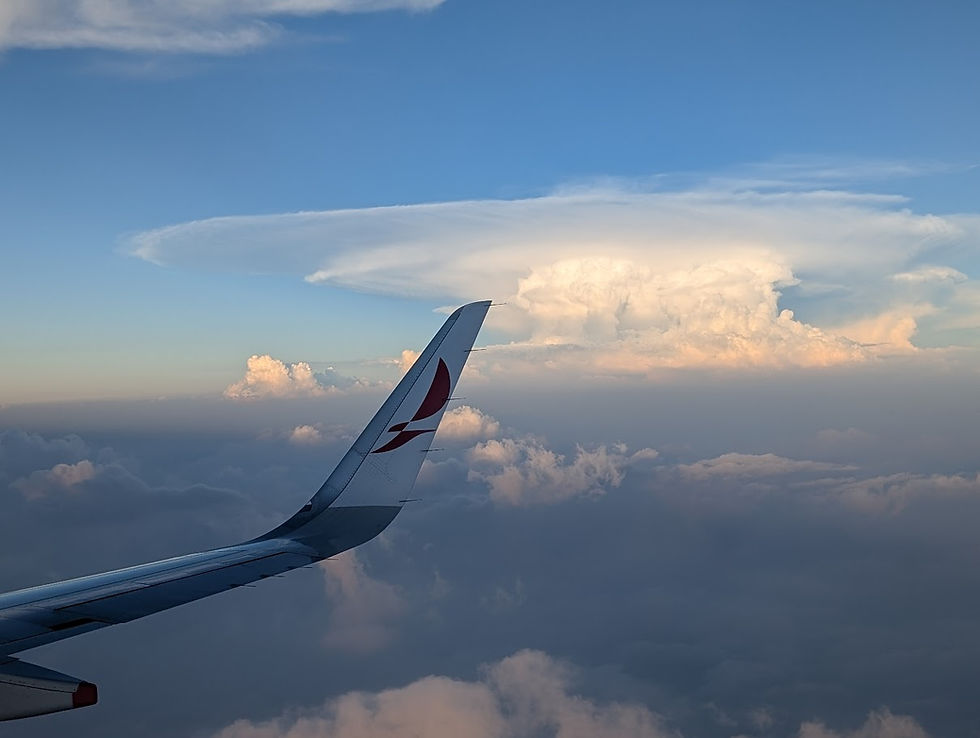
Airports are a particular kind of sensory overload: crowds, time pressure, announcements, security queues, unfamiliar layouts, the persistent low-grade fear that you've forgotten something critical. And then there's the plane itself - a metal tube at 35,000 feet that, for many nervous travellers, is its own separate category of terror.
Let's break both down.
Arrive Early - Seriously
This is the single most effective thing you can do for airport anxiety. Arriving early removes the pressure of rushing, gives you time to find your gate without panic, and means a delayed bag-drop queue won't cause a catastrophe.
For international flights, I recommend arriving at least three hours before departure. For domestic flights, two hours is a comfortable buffer. Yes, you might end up sitting at the gate for a while. That's fine. Sitting calmly at a gate with a coffee is infinitely better than sprinting through an airport convinced you're about to miss your flight.
Know Your Airport Before You Arrive
Most major airports have maps and terminal guides on their websites. Five minutes spent familiarising yourself with the layout - where check-in is, where security is, how to get from arrivals to your gate - can dramatically reduce the overwhelm of arriving somewhere unfamiliar.
Look up: which terminal your airline uses, whether your airport has a single security checkpoint or multiple, where to find the shops and food options after security (this becomes your calm-down zone). Small knowledge gaps, filled in advance, become one less thing to anxiety-spiral about.
Have a Post-Security Ritual
Once you're through security, you're in. The hard part is done. Having a consistent ritual for this moment - get a coffee, find your gate, sit down, put on headphones - gives your nervous system a reliable signal that things are under control.
Routines are deeply calming for anxious brains. Build one you can use at every airport.
For Flying Anxiety Specifically
Fear of flying is one of the most common travel anxieties, and it exists on a spectrum - from mild discomfort during turbulence to full-blown avoidance of planes altogether. Here are strategies across that spectrum:
Understand turbulence: Turbulence is uncomfortable, not dangerous. Commercial pilots fly through it routinely. It is the rough weather equivalent of a bumpy road - unpleasant, but not a sign anything is wrong. Look up what turbulence actually is - the mechanics of it. Knowledge reduces fear.
Choose your seat strategically: Seats over the wing experience less turbulence. Aisle seats give you the ability to move, which can reduce claustrophobia. Avoid the rear of the plane if you're sensitive to motion.
Download something entertaining before you board: The moment the seatbelt sign comes on, have something ready - a podcast, an audiobook, a downloaded show. Your brain needs an alternative occupation.
Breathe deliberately: Box breathing (inhale for four counts, hold for four, exhale for four, hold for four) activates the parasympathetic nervous system and physically calms an anxious response. Practice it before you need it so it becomes automatic.
Tell the crew if you're anxious: Flight attendants see this every day. They are trained to help. You don't have to white-knuckle it alone - a brief word during boarding means they can check in on you.
✈️ Remember: Every flight you take builds evidence for your brain that flying is survivable. It doesn't get easy overnight, but it does get easier.

Part 3: Arriving Somewhere Unfamiliar
There's a specific kind of anxiety that hits when you land somewhere new. The airport is foreign. The signs might be in a different language. You don't know exactly how to get to your accommodation. Everything is unfamiliar at once, and your brain - which has been on high alert since you left home - is very tired.
This is a transition moment, and it's one of the most anxiety-prone of any trip. Here's how to make it smoother.
Plan Your Arrival Before You Leave Home
The single best thing you can do for arrival anxiety is to have a clear, simple plan ready before you land. Specifically:
Know exactly how you're getting from the airport to your accommodation - research the options (shuttle, train, taxi, rideshare) and pick one before you arrive, not while you're standing exhausted at baggage claim. "Getting Around Any City: The Nervous Traveller's Guide to Public Transport"
Save your accommodation address offline. Screenshot it, write it down, save it in your notes app - whatever works. Don't rely on having wi-fi to find it.
Know the approximate cost of your chosen transport option so you're not guessing or being caught off-guard.
If you're crossing time zones, arrive in daylight if possible. Everything is more manageable when you can see it.
Give Yourself a Slow First Day
Packing your first day with sightseeing is a recipe for overwhelm. Your body is jet-lagged, your senses are adjusting, and your brain is processing a completely new environment. Be kind to yourself.
Plan for a gentle first day: find your accommodation, have a meal, take a short walk to get your bearings. That's enough. The sights will still be there tomorrow. Starting slow sets a calmer tone for the whole trip.
Get Your Bearings on Foot
Once you've settled in, one of the best antidotes to the disorientation of an unfamiliar place is a short, purposeless walk. Not a tour. Not a mission to find a specific restaurant. Just a wander around the block.
This does several things: it familiarises your body with the physical space (your nervous system calms when it has spatial reference points), it lets you discover your immediate neighbourhood at your own pace, and it gently builds the evidence your brain needs that this place is navigable.
Establish a Comfort Base
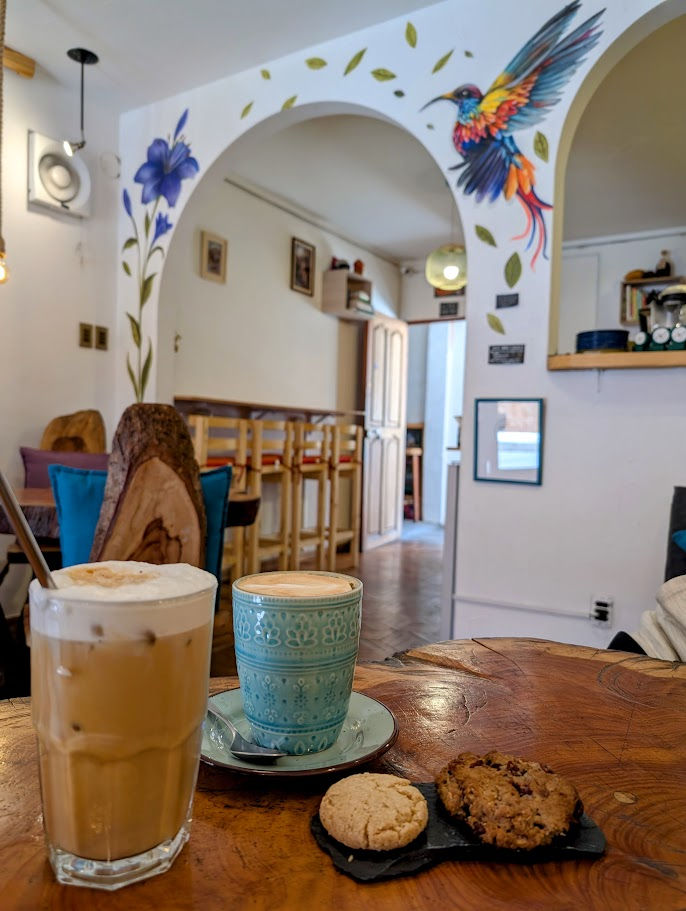
Finding one anchor in an unfamiliar place - a coffee shop you like, a supermarket you know, a park bench with a view - does wonders for making somewhere feel less alien. Nervous travellers often feel more at ease once they have a 'spot'. Give yourself permission to go back to the same place twice. There's no rule that says you have to maximise novelty every hour.
Use Your Phone as a Tool, Not a Crutch
Google Maps, translation apps, and offline city guides are genuinely useful. Use them. But try to resist the urge to have your phone out navigating at every single moment - it prevents you from noticing the environment around you and building your own internal map, which is what helps a place start to feel familiar.
A practical approach: check the map before you leave your accommodation, walk the route, and only pull your phone out if you genuinely need it. You'll be surprised how quickly this builds confidence.
Part 4: The Particular Nerves of Solo Travel
Solo travel occupies its own category of nervous-traveller anxiety, and understandably so. You're responsible for every decision. There's no one to double-check things with, no safety net of another person to share the weight of a stressful moment, no default companion at dinner.
And yet - solo travel is also one of the most profoundly rewarding ways to see the world. Here's how to make the anxiety of it manageable.
Tell People Where You're Going
This sounds obvious, but it's easily overlooked in the pre-trip chaos. Before you leave, make sure someone you trust has your full itinerary: accommodation details, flight numbers, contact information for your hotels. Check in with them at agreed intervals - a quick 'arrived safely' message does a lot to manage other people's worry and, in turn, yours.
You're not being overcautious. You're being responsible. There's a difference.
Start with Beginner-Friendly Destinations
If this is your first solo trip, picking a destination that's easy to navigate dramatically lowers the anxiety stakes. Easy solo travel destinations generally have:
Well-developed tourist infrastructure (clear transport systems, English widely spoken)
Good safety records for independent travellers
A culture of solo travel (hostels, organised tours, social dining options)
Strong online communities of travellers sharing current, practical advice
Some perennial favourites for first-time solo travellers include Japan, New Zealand, Portugal, and Iceland - all places with excellent infrastructure and strong reputations for safety. Once you've built some solo travel confidence, you can take on more complex destinations.
Book Your First Night's Accommodation in Advance - Always
There is almost no situation where arriving in a new city without accommodation booked for at least your first night is a good idea for a nervous traveller. The mental overhead of finding somewhere when you're tired, disoriented, and possibly jet-lagged is enormous. Book it and take that decision off the table entirely.
Plan for Solo Dining
For many solo travellers, eating alone - particularly at dinner - is one of the most anxiety-producing situations. Here's a reframe: solo dining is normal, it's common, and in many cultures it's entirely unremarkable.
Practical strategies to make it easier:
Sit at a bar or counter if available - it's designed for solo diners and often leads to conversation.
Bring a book or download something to read - having something to do with your attention removes the self-consciousness.
Seek out casual, busy venues rather than formal restaurants - the energy of a lively place makes solitude less noticeable.
Try markets, food halls, or street food - these are inherently social eating environments.
Learn to Sit With Your Own Company
Solo travel requires a certain comfort with your own presence that most of us haven't really had to practise in daily life. The good news is that it develops with practice - often surprisingly quickly.
The first day of a solo trip can feel very loud in your own head. By day three or four, something usually shifts. You start noticing things you wouldn't have noticed with a companion. You make small connections - with locals, with other travellers, with the place itself - that wouldn't have happened with another person there to fill the space. Solo travel has a way of making you more present, almost by necessity.
🌍 Reminder: Nervous solo travellers are still solo travellers. The nervousness doesn't disqualify you. It just means you're paying attention.

Part 5: General Strategies for Managing Travel Anxiety
Beyond the specific moments of a trip, there are broader habits and approaches that can meaningfully reduce travel anxiety overall. These work before, during, and after travel.
Get Your Travel Insurance Right
One of the most anxiety-reducing things you can do is have comprehensive travel insurance that you've actually read. Not skimmed. Read. Knowing what's covered - medical emergencies, trip cancellations, lost luggage - removes a category of 'what if' that your anxious brain would otherwise fill in with worst-case scenarios.
As an Australian traveller, make sure your policy covers medical evacuation (this is particularly important for travel to regions where healthcare access is limited), and understand the claims process before you need it.
Build in Recovery Time
Anxious travellers are often also people who push themselves. You booked the trip, you went, you're determined to see everything, do everything, waste nothing. But pushing yourself without recovery time is a fast path to burnout - and burnout on the road looks like anxiety at its worst.
Build downtime deliberately into your itinerary. An afternoon with no plans. A day where you sleep in. A morning in a cafe with a journal. These aren't wasted time - they're what make the busy days sustainable.
Keep a Small Familiar Routine
Travel disrupts routine, and for anxious people, routine is often a scaffolding that keeps anxiety manageable. You can't replicate your home routine on the road, but you can take small pieces of it with you.
Maybe that's your morning coffee ritual, a ten-minute journal entry before bed, a short walk or stretch at a certain time of day. Whatever anchor works for you - pack it mentally, and prioritise it even when the trip gets busy.
Know Your Limits and Honour Them
Part of learning to travel as a nervous person is learning what your nervous system can actually handle - and respecting that, rather than constantly pushing past it.
If you need quieter accommodation rather than a lively social hostel, book it without apology. If three major activities in a day is too much, plan for two. If you need a travel companion for this trip and solo travel can come later, that's completely valid. Your version of travel is allowed to look different from someone else's highlight reel.
Talk to Someone if Anxiety Becomes Severe
Travel anxiety exists on a spectrum. For most people, the strategies in this guide will help. But if your anxiety is severe - if it's preventing you from booking trips you genuinely want to take, causing panic attacks, or significantly impacting your quality of life - that's worth talking to a healthcare professional about.
Cognitive behavioural therapy (CBT) has a strong evidence base for anxiety management, and there are therapists who specialise specifically in travel anxiety and fear of flying. Getting support isn't a weakness - it's how you get to travel more, not less.
You Don't Have to Not Be Nervous. You Just Have to Go.
Travel anxiety is real. It's inconvenient. It can make you second-guess every decision and generate catastrophic what-ifs at three in the morning.
But it is also manageable. With the right preparation, the right strategies, and the right amount of grace towards yourself, the anxiety becomes something you travel alongside - not something that stops you from going.
Every trip you take builds evidence: that you can handle the unfamiliar, that you can navigate a new place, that the things you were worried about were mostly manageable, and the things that surprised you were often wonderful. That evidence accumulates. It doesn't make the nerves disappear, but it changes their weight.
You are capable of this. Nervous and capable are not opposites. They've always been allowed to be the same thing.
Now go plan that trip.
Quick Reference: Managing Travel Anxiety at Every Stage
Before You Go
Plan in layers — book essentials first, fill details in later
Set a planning time limit to avoid spiral-research
Build your personal reusable packing and preparation checklist
Get travel insurance and actually read the policy
Stop reading anxiety-bait content — seek practical prep instead
At the Airport
Arrive at least 3 hours early for international travel
Know your terminal and gate layout before you arrive
Establish a consistent post-security ritual
Tell the crew if you're anxious - they are trained to help
On the Plane
Sit over the wing for less turbulence
Download absorbing content before you board
Practice box breathing: 4 counts in, hold 4, out 4, hold 4
Remember: turbulence is uncomfortable, not dangerous
Arriving Somewhere New
Plan your airport-to-accommodation transport before you land
Save your accommodation address offline
Give yourself a gentle, low-key first day
Find your 'spot' - a local anchor to return to
Solo Travel
Share your itinerary with someone you trust
Start with beginner-friendly destinations
Always book your first night's accommodation in advance
Embrace solo dining - bar seats, books, and busy venues help
Comments